
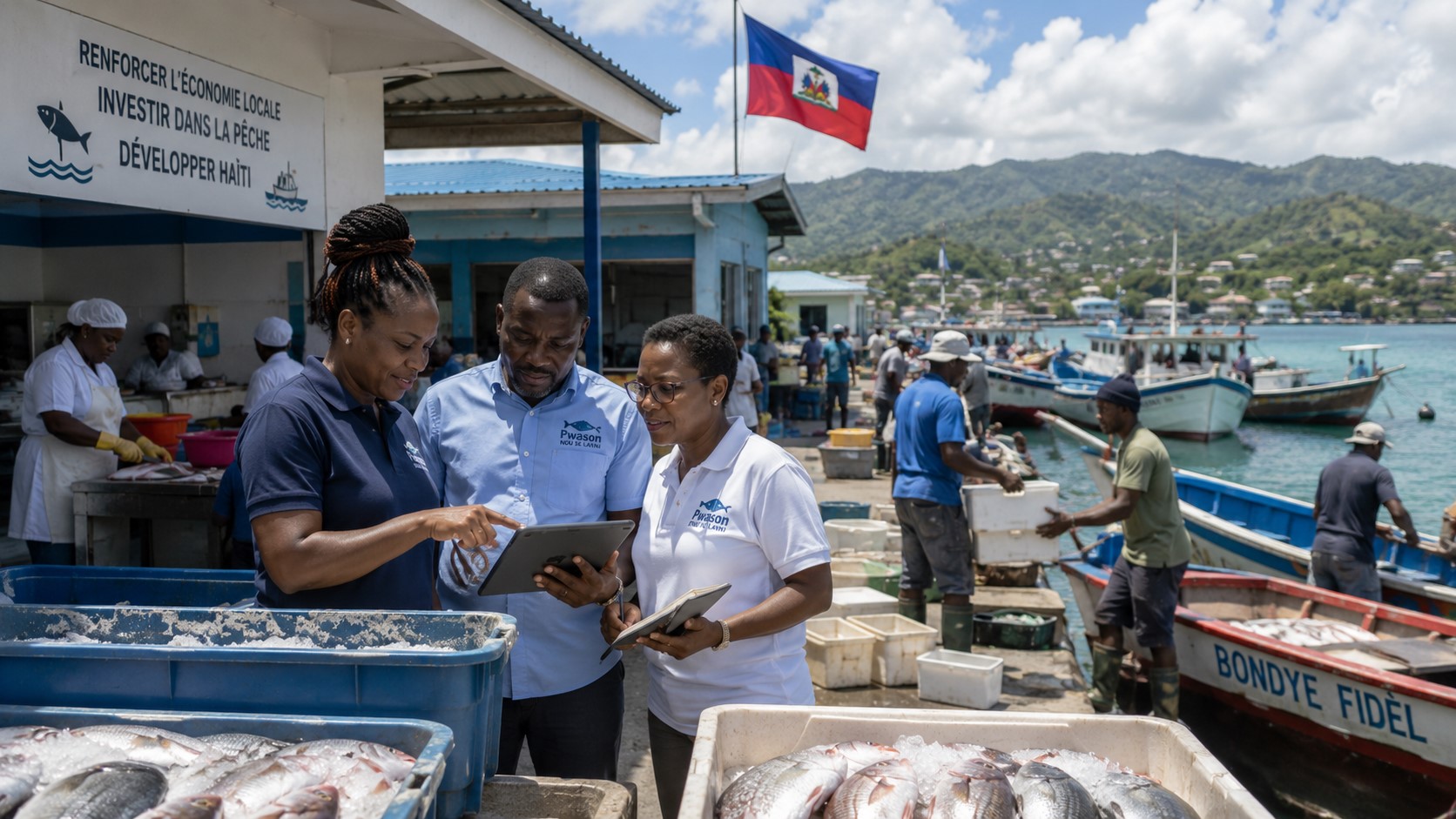
PORT-AU-PRINCE, Haiti — Haiti’s coastal economy is receiving renewed attention as a US$26.6 million Inclusive Blue Economy Project supports infrastructure, local industries and business activity in vulnerable coastal communities.
The project, launched in 2022 with support from the International Fund for Agricultural Development (IFAD), is helping strengthen fisheries, coastal infrastructure, food production and rural livelihoods.
The programme is designed to help coastal businesses remain productive despite Haiti’s difficult economic and security environment.
On the country’s northern coast, investment is supporting essential rural infrastructure and the revitalisation of local industries, with the goal of improving food security and strengthening economic self-sufficiency.
For small businesses and fishing communities, better infrastructure can make it easier to move products, reach markets and maintain commercial activity.
The blue economy also provides Haiti with an opportunity to develop economic sectors connected to its extensive coastline and marine resources.
The project’s focus on local industries could create additional opportunities for entrepreneurs working in fisheries, food processing, transportation and related services.
The initiative is particularly significant for rural communities where livelihoods depend heavily on natural resources and local markets.
Strengthening these businesses could help communities become more resilient while supporting employment and household incomes.
The project also links economic development with food security, making coastal investment important not only for businesses but for communities facing persistent economic pressures.
Haiti’s blue economy is emerging as one potential pathway for building local enterprise and strengthening economic resilience from the coast outward.
Comments (0)
Sign in to join the conversation.