

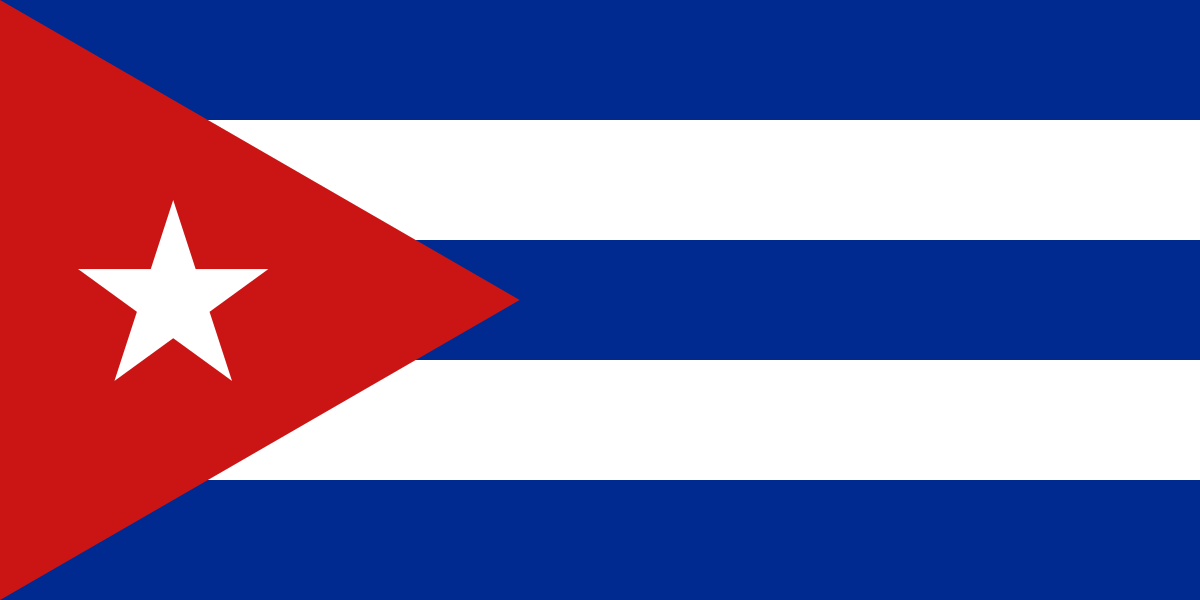





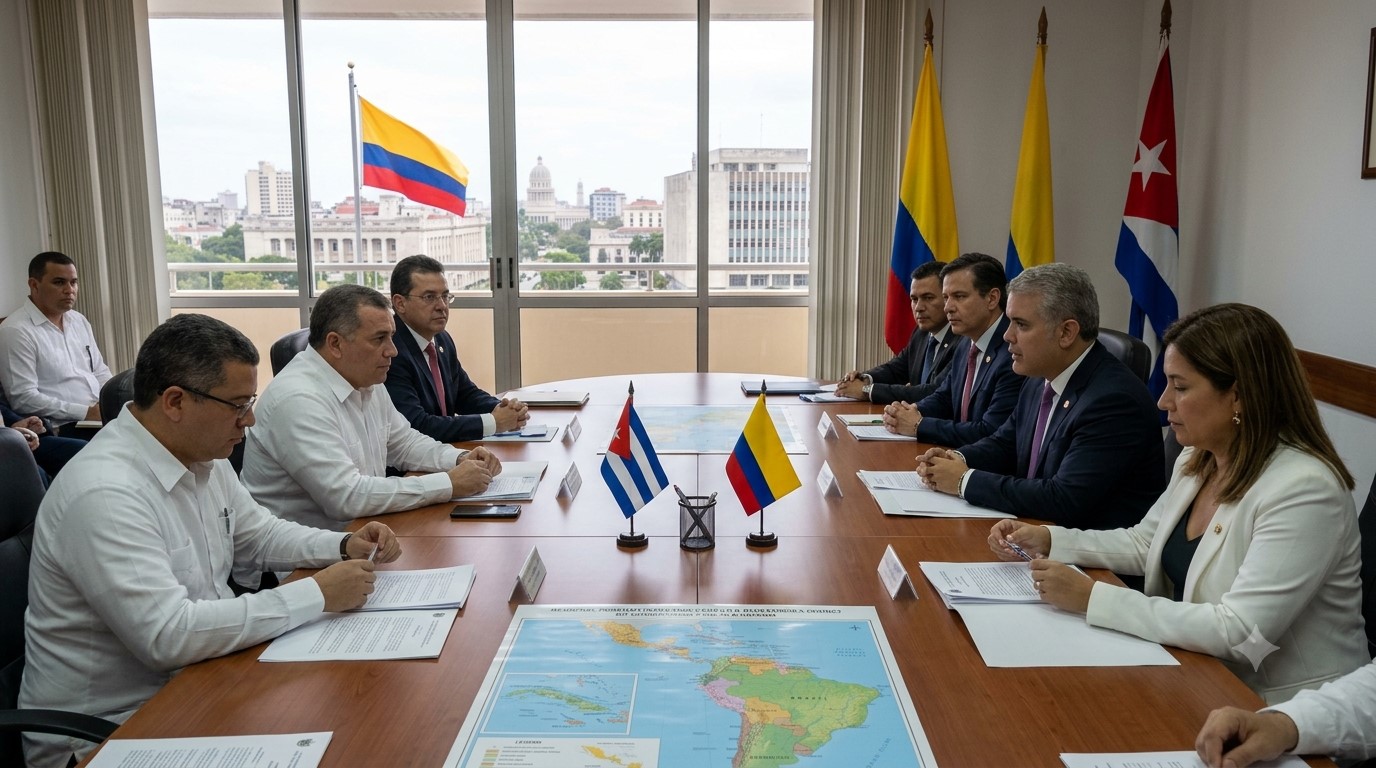
HAVANA, Cuba — Cuba is facing a new diplomatic development as Colombia's incoming government moves to significantly reduce its official presence in Havana, signaling a shift in regional relations.
Colombia's new administration, taking office on August 7, 2026, has announced plans to close its embassy in Cuba while exploring more limited diplomatic channels for maintaining communication.
The decision represents a notable change in Colombia's approach to Havana, following a period of closer engagement under outgoing President Gustavo Petro.
Under the previous Colombian administration, Cuba played an important role in regional diplomacy, including hosting peace negotiations involving Colombia's National Liberation Army (ELN).
The incoming government has adopted a considerably harder position toward Cuba and Nicaragua, describing the countries as being on a different political path and arguing that Colombia should not provide full diplomatic recognition through traditional embassy structures.
For Havana, the move could reduce one of its established diplomatic channels in South America at a time when Cuba is already facing significant international political and economic pressure.
The diplomatic shift could also influence Cuba's broader relationship with Latin American governments, particularly as countries reassess their foreign-policy priorities and relationships with Washington.
Colombian officials have indicated that the decision does not necessarily mean ending all communication with Cuba, leaving open the possibility of maintaining lower-level diplomatic contacts.
The development is being closely watched in Havana as Cuba seeks to maintain regional partnerships while navigating increasingly difficult relations with the United States and other governments.
The latest move highlights the changing diplomatic environment surrounding Cuba and could become an important issue in Havana's foreign-policy calculations in the months ahead.
Comments (0)
Sign in to join the conversation.