


























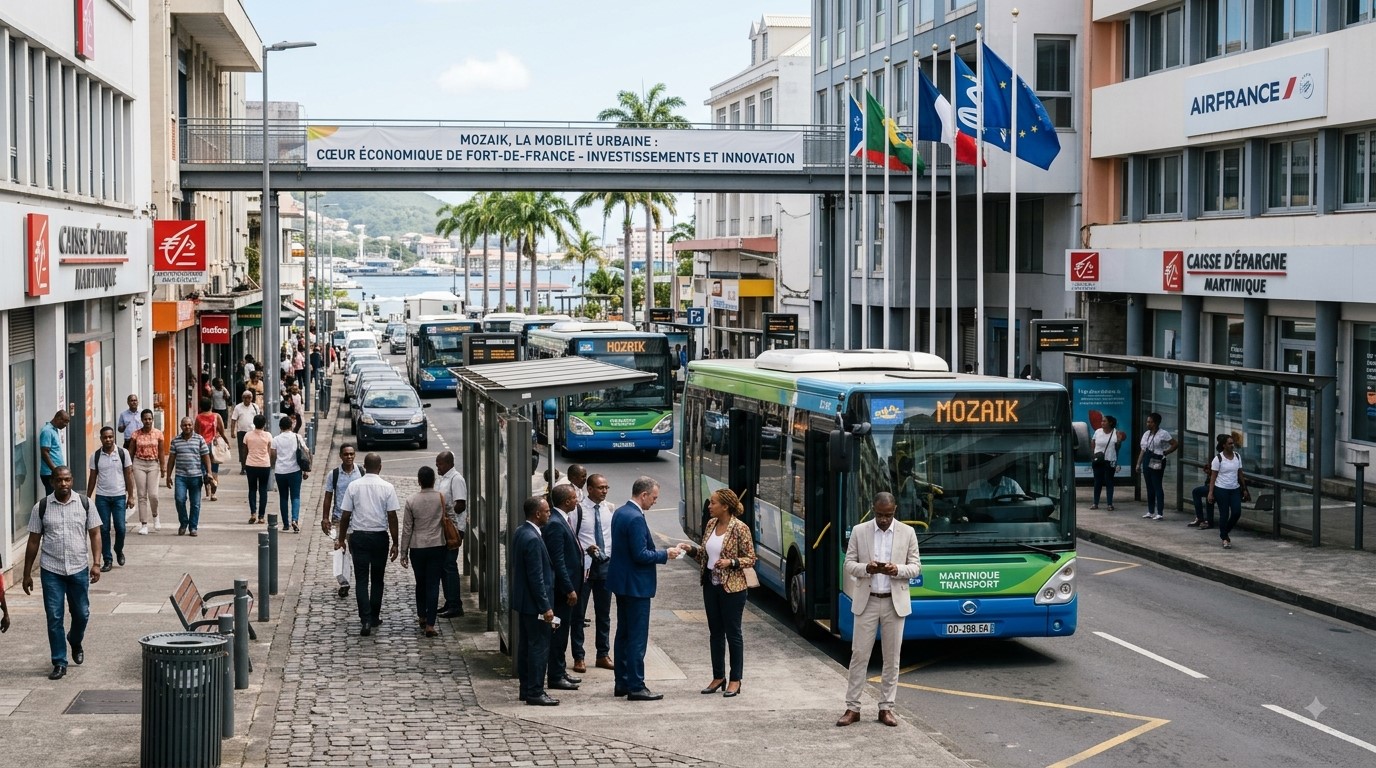
FORT-DE-FRANCE, Martinique — A renewed debate over the financing of Martinique’s public transport system is putting the cost of mobility and the island’s wider business environment under scrutiny.
Recent discussion has focused on who should ultimately pay the bill for Martinique Transport, almost eight years after the authority was established and as the network and services have continued to develop.
The issue has direct implications for businesses, workers and commuters who depend on reliable and affordable transport.
Transport costs are an important part of the operating environment for companies, particularly retailers, service businesses and employers whose workers travel across the island.
A sustainable financing model could also help provide greater certainty for future investments in buses, infrastructure and passenger services.
For local businesses, dependable public transport can reduce mobility barriers and make it easier for employees and customers to reach commercial centres.
The funding debate therefore extends beyond government accounts, touching on employment, productivity and the competitiveness of commercial areas.
Authorities and stakeholders are expected to continue examining how responsibilities should be divided and how the system can remain financially sustainable.
The outcome could influence both future transport investment and the cost of doing business in Martinique.
With transport remaining a major part of daily economic activity, businesses will be watching closely as discussions over the system’s financing continue.
Comments (0)
Sign in to join the conversation.