









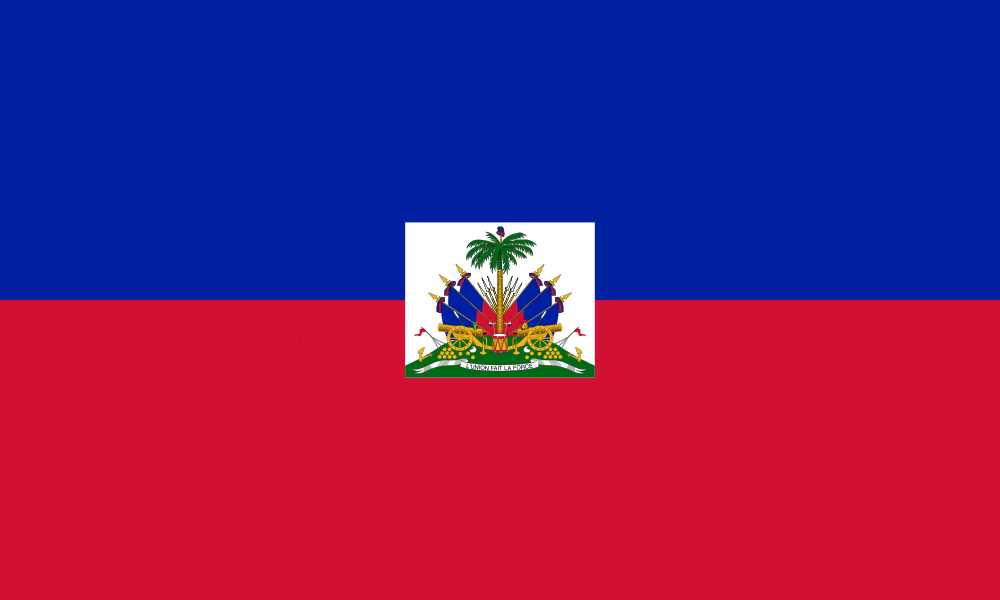






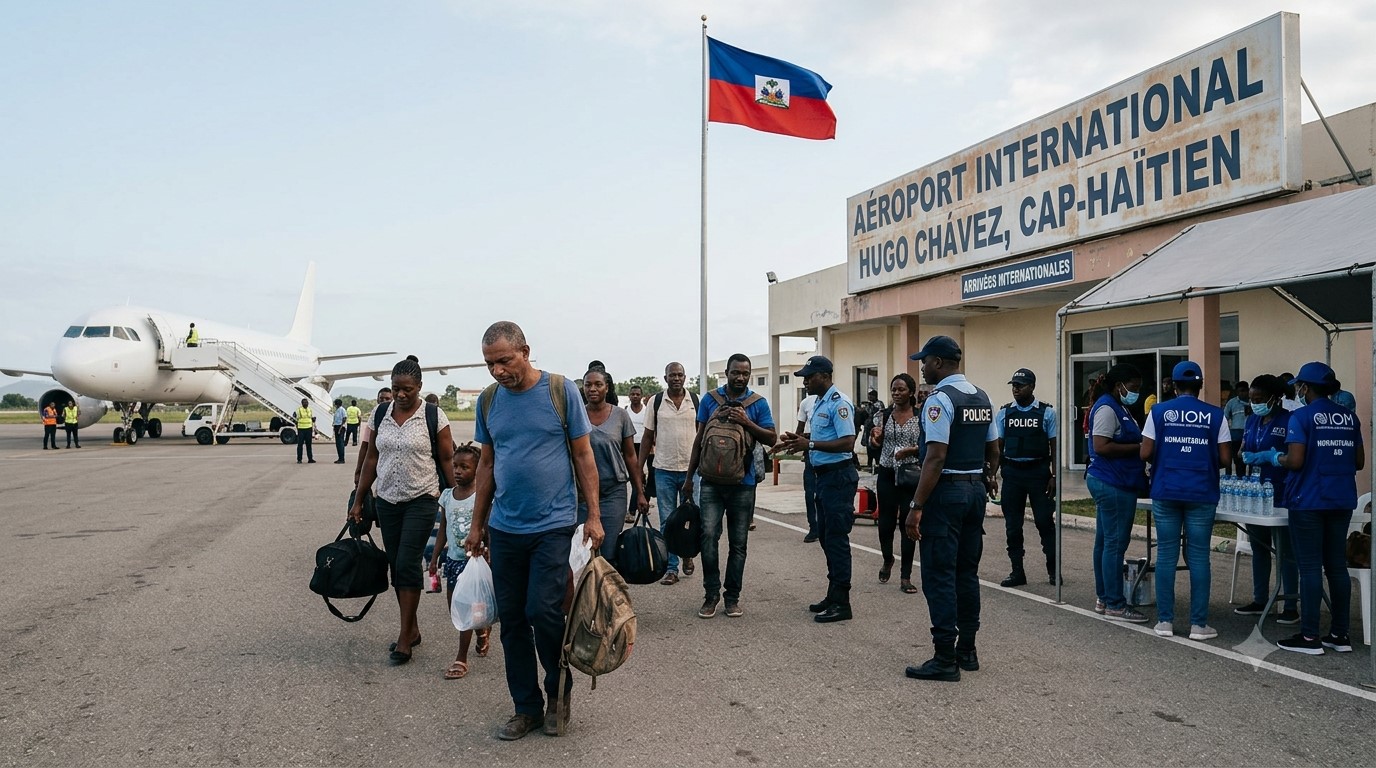
CAP-HAÏTIEN, Haiti — Haiti is facing a new migration challenge after more than 160 Haitians arrived in Cap-Haïtien on August 21, following the U.S. decision to end Temporary Protected Status for Haitian nationals.
The arrival marked the first large deportation flight following the termination of the protection programme, which had allowed hundreds of thousands of Haitians to live and work legally in the United States.
The deportations are creating fresh concerns over reintegration, humanitarian assistance and access to basic services for returnees.
The flight was directed to Cap-Haïtien rather than Port-au-Prince because of the continuing security situation in the capital, where armed gangs control large areas and major transport routes remain difficult to use.
For many returnees, the arrival represents a major transition after years living and working in the United States.
Haitian authorities and humanitarian organisations now face the challenge of helping returnees access transportation, accommodation, identification and other essential services.
The development also has wider implications for families and communities connected to Haitians living abroad, particularly as additional removals could follow.
Haiti is already dealing with severe displacement, insecurity and pressure on public services. The International Committee of the Red Cross has warned that violence is spreading into areas previously considered safer.
The latest arrivals therefore add another layer of pressure to an already strained humanitarian environment.
Authorities and community organisations are expected to monitor the situation as more Haitian nationals potentially return from the United States.
The first major deportation flight has placed Haiti’s capacity to receive and reintegrate returnees firmly back in the national spotlight.
Comments (0)
Sign in to join the conversation.