



























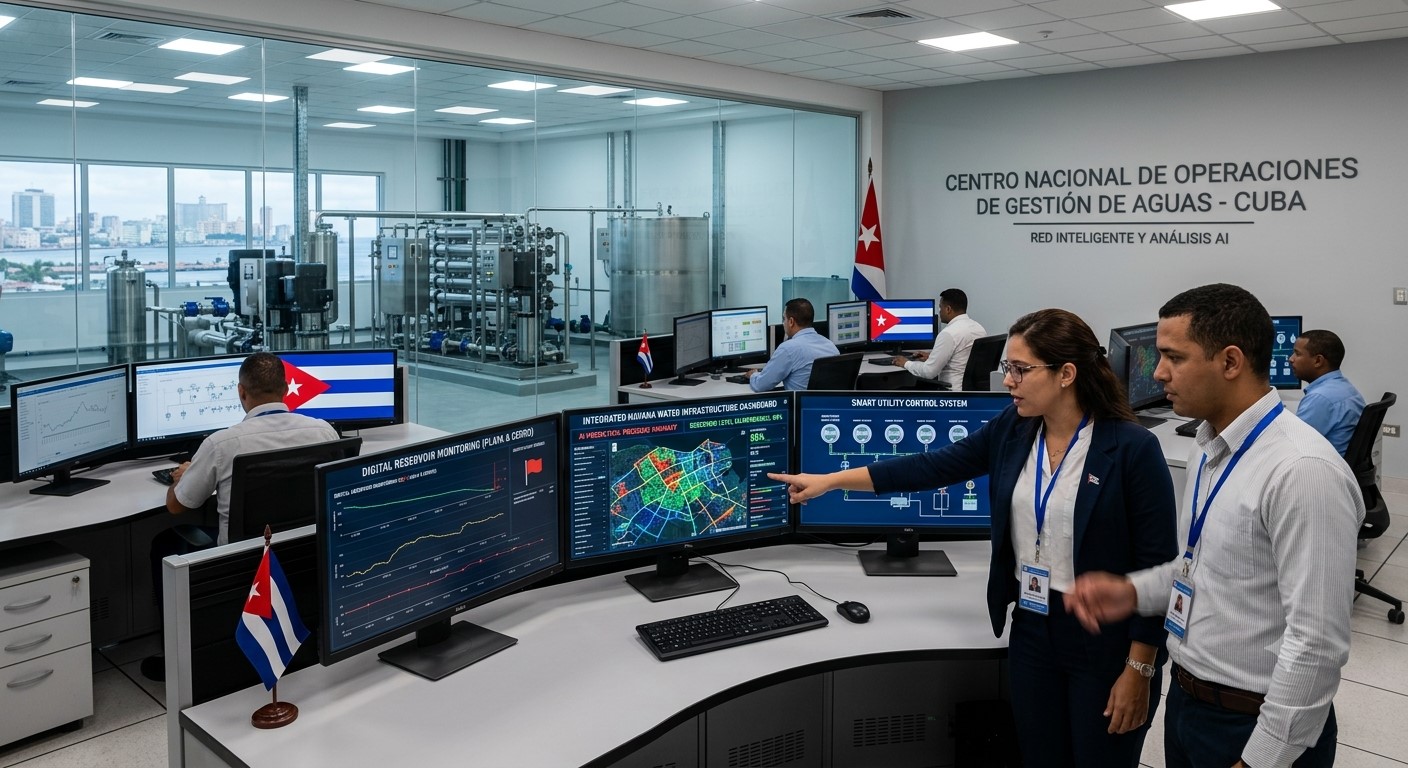
HAVANA, Cuba — Cuban authorities have announced the launch of a National Water Security Modernization Programme aimed at strengthening water infrastructure, improving supply reliability, and expanding the use of advanced digital technologies in utility management.
Government officials, engineers, environmental specialists, utility providers, technology experts, and regional infrastructure partners introduced investments supporting AI-powered water monitoring, intelligent leak detection, smart pumping systems, digital reservoir management, cloud-based operational platforms, and secure infrastructure monitoring.
Officials stated that modernizing water infrastructure is essential for improving service efficiency, supporting sustainable development, and strengthening resilience against future environmental challenges.
The programme includes automated distribution management, real-time pipeline monitoring, predictive maintenance technology, smart metering systems, digital water quality analysis, renewable-powered pumping stations, and cybersecurity protections for critical utility networks.
Infrastructure specialists welcomed the initiative, explaining that intelligent monitoring technologies reduce water losses while improving operational efficiency and response times.
Environmental experts highlighted the use of artificial intelligence, remote sensing, cloud computing, and advanced analytics to improve resource management and long-term sustainability.
Business organizations also praised the investment, noting that reliable water infrastructure supports manufacturing, tourism, agriculture, healthcare, and local economic development.
Community representatives welcomed the programme, saying improved utility services will benefit households while strengthening public infrastructure across the country.
Officials confirmed that additional modernization projects, environmental investments, and digital infrastructure upgrades will continue throughout future implementation phases.
The latest initiative reflects Cuba's commitment to infrastructure modernization, resource sustainability, and resilient public services.



Comments (0)
Sign in to join the conversation.